
FPV Simulator System Requirements – Can I Run It on Switch / Emulator? (2026 Specs) Free Download Romslabs
Quick Answer – Can I Run FPV Simulator ? To run FPV Simulator (Latest v2026 Build) smoothly at 1080p 60 FPS, your system requires a 64-bit operating system (Windows 10/11 or SteamOS), an Intel Core i5 / AMD Ryzen 5 processor, 8 GB to 16 GB of RAM, and a DirectX 11/12 or Vulkan-capable GPU with 4 GB+ VRAM.
→ Go to Main FPV Simulator (Latest v2026 Build) Full Download Page
FPV Simulator Minimum vs. Recommended System Requirements (2026)
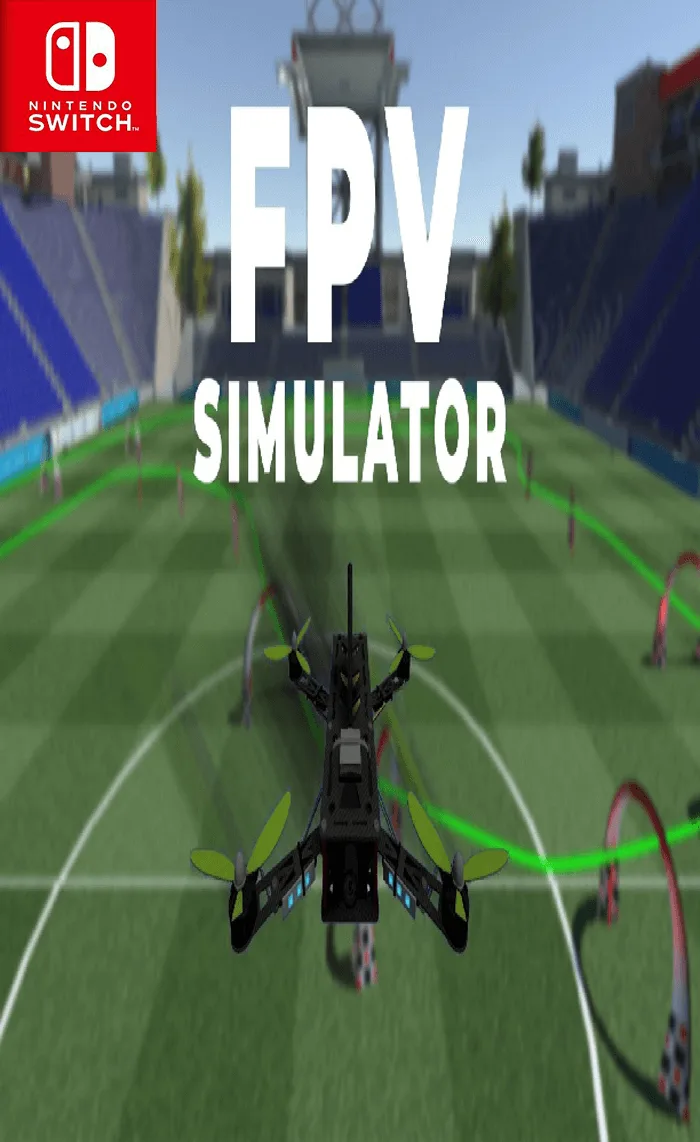
FPV Simulator System Requirements – Can I Run It on Switch / Emulator? is a Nintendo Switch game for Windows / macOS / Linux / Android / iOS. This tested release includes v1.0 with an estimated download size of 12 GB. Provided in clean NSP/XCI format, verified working on genuine custom firmware (Atmosphere) and PC emulators (Ryujinx/Sudachi).
| Hardware Component | Minimum Specs (720p/1080p @ 30–60 FPS) | Recommended Specs (1080p/1440p @ 60+ FPS) |
|---|---|---|
| OS / Environment | Windows 10 64-bit / Linux Proton | Windows 11 64-bit / SteamOS 3.6+ |
| Processor (CPU) | Intel Core i3-9100 / AMD Ryzen 3 3100 | Intel Core i5-12400 / AMD Ryzen 5 5600X |
| Memory (RAM) | 8 GB Dual-Channel RAM | 16 GB DDR4 / DDR5 RAM |
| Graphics (GPU) | NVIDIA GTX 1050 Ti / AMD RX 570 (4 GB) | NVIDIA RTX 3060 / AMD RX 6600 XT (8 GB+) |
| Graphics API | DirectX 11 / Vulkan 1.3 | DirectX 12 / Vulkan 1.3 with Async Shaders |
| Build Version | Latest v2026 Build | Latest v2026 Build (Full Pre-Installed Release) |
Steam Deck, ROG Ally & Emulator Performance Profile
- Steam Deck (OLED / LCD): Runs at 800p 45–60 FPS using Proton GE with TDP set to 12W–15W and FSR balanced scaling enabled.
- Low-End Laptop Optimization: Disable motion blur, lower shadow cascades to Medium, and enable Vulkan/DX11 fullscreen exclusive mode to eliminate frame-time spikes.
- Related Guides: Installation Guide | Crash & Error Fixes | Update & Patch Notes
FPV Simulator Switch NSP Free Download Romslab
The world of first-person view drone flying represents one of the most thrilling and technically demanding hobbies to emerge in recent years. Translating the visceral, high-speed experience of real-world FPV flight into a digital format is a monumental challenge. FPV simulator software, therefore, is not merely a game in the traditional sense; it is an essential training tool, a creative sandbox, and a performance test bench. Their value proposition hinges on authenticity, accessibility, and utility. A comprehensive review must dissect these programs across several critical axes: the fidelity of the physics simulation, the quality and diversity of content. ROMSLAB
FPV Simulator Switch NSP Free Download Romslab
The user experience from installation to daily use, and the overall effectiveness in bridging the gap between virtual and actual flight. The paramount criterion for any serious FPV simulator is the accuracy of its flight physics. This is the bedrock upon which all other features rest. A simulator with poor physics is little more than an arcade distraction, potentially instilling bad habits that are dangerous and expensive to unlearn in reality. The core sensation of flight is dictated by how the software models the quadcopter’s response to throttle, the behavior of its inertial measurement unit, the effects of propeller torque and air resistance, and the subtleties of different rates and profiles.
Laser-timed tracks, competitive multiplayer, ranking system, detailed lap analysis, practice ghosts of top pilots.
Top-tier simulators like VelociDrone and Liftoff have invested heavily in this area, often collaborating with professional pilots to fine-tune their models. The feel is distinct. VelociDrone is frequently praised for its weighty, momentum-based physics that closely mirror flying a heavier, real-world five-inch quad. Crashes carry consequence, and precision requires careful throttle management. Liftoff, while sometimes perceived as slightly floatier, offers extensive customization of drone components—every motor, battery, and frame can be swapped—and these changes perceptibly alter flight characteristics. This not only aids in realism but also serves as an educational tool for understanding how hardware choices affect performance. Comic Coloring Book – Complete Edition Switch NSP
FPV Simulator Switch NSP Free Download Romslab
Uncrashed and DRL Simulator offer compelling alternatives, with DRL leaning into a more polished, predictable feel suitable for its racing league environment, while Uncrashed finds a interesting middle ground with stunning visuals and responsive, if slightly forgiving, physics. The key takeaway is that while no simulator perfectly replicates the gut-whereabouts and adrenaline of real flight, the best ones capture the essential *relationship* between stick input and quadcopter motion. The muscle memory developed for maintaining altitude in a turn, for executing a precise power loop, or for managing speed through a technical section translates directly to the field.
Professionally designed multi-gate tracks with varying difficulties (beginner to pro). Includes lap timers, ghost drones, and split times.
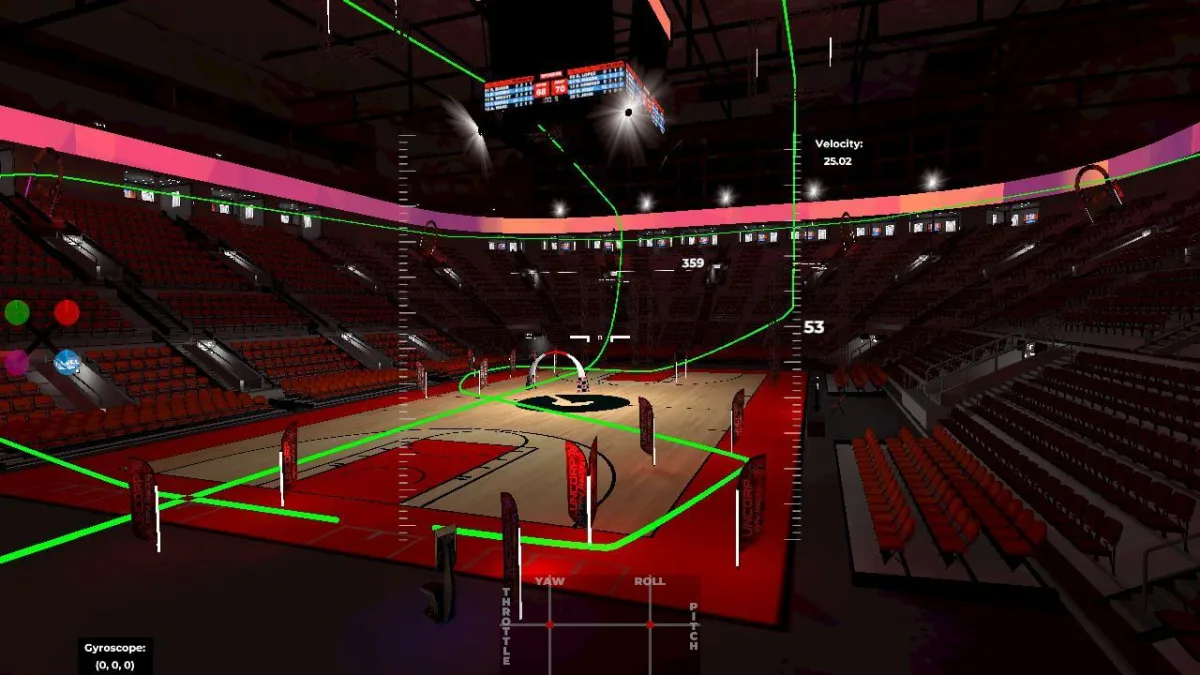
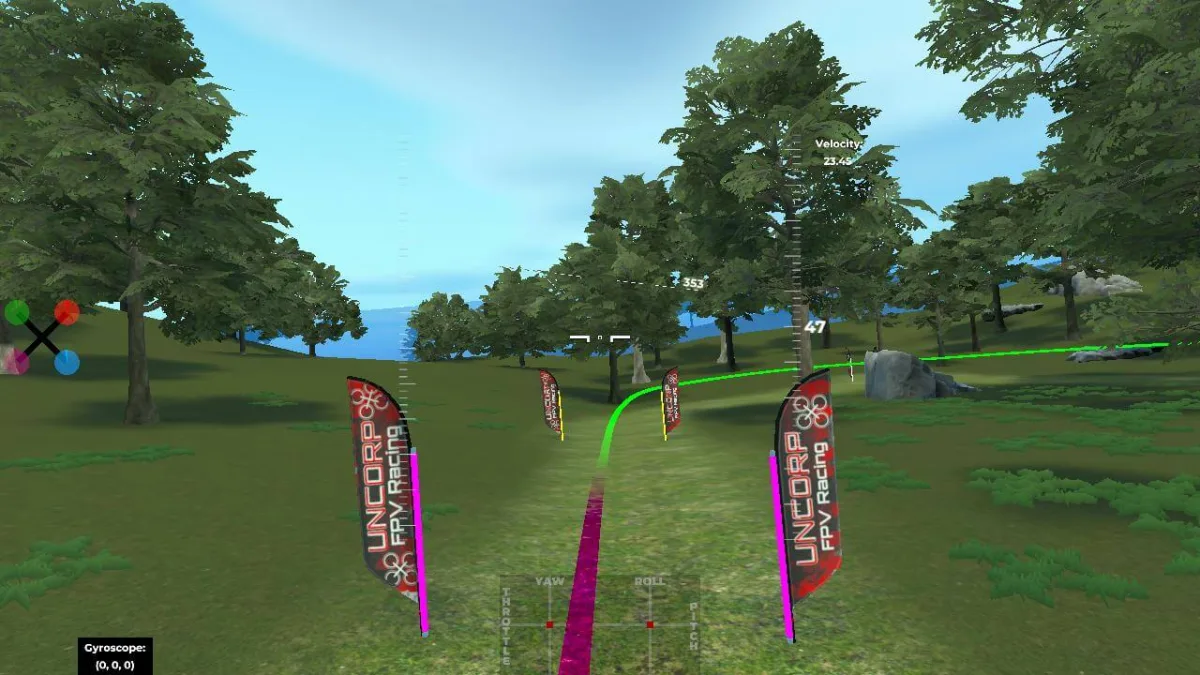
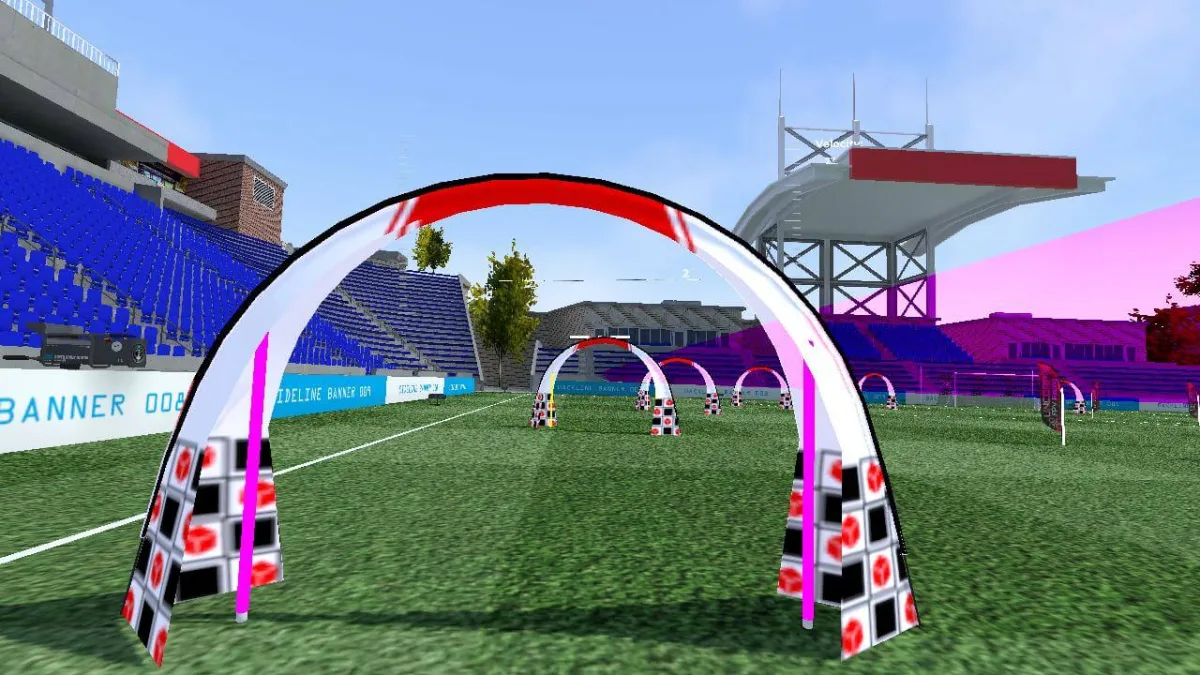
Beyond the raw physics, the environment in which one flies is crucial. Content encompasses maps, game modes, and customization options. A simulator with perfect physics but only a single, empty warehouse would quickly grow stale. Variety is essential for comprehensive training. Maps range from photorealistic recreations of natural landscapes and urban environments to abstract, neon-lit racing tracks and giant obstacle courses. Good simulators provide a mix. Wide-open areas are necessary for practicing big, flowing freestyle moves without the anxiety of collision. Dense, complex environments like multi-story car parks or forests train reflexes and spatial awareness. Comic Store Arcade Switch NSP
FPV Simulator Switch NSP Free Download Romslab
Specifically designed racing gates and tracks, often replicating those from major competitions, are indispensable for aspiring racers. The visual design also matters; a clear distinction between gates and background, consistent lighting, and a sense of scale all contribute to a productive practice session. Game modes extend the utility. Freestyle mode is the digital playground for creativity. Racing modes, whether against AI ghosts or online competitors, introduce pressure and the need for consistency. Some simulators include challenges, tutorial missions, or even mission-based gameplay like drone-combat or search-and-rescue scenarios, which can be entertaining diversions.
Ability to adjust motor KV, battery cells, prop size/pitch, weight, and frame size to match real-world quadcopters.
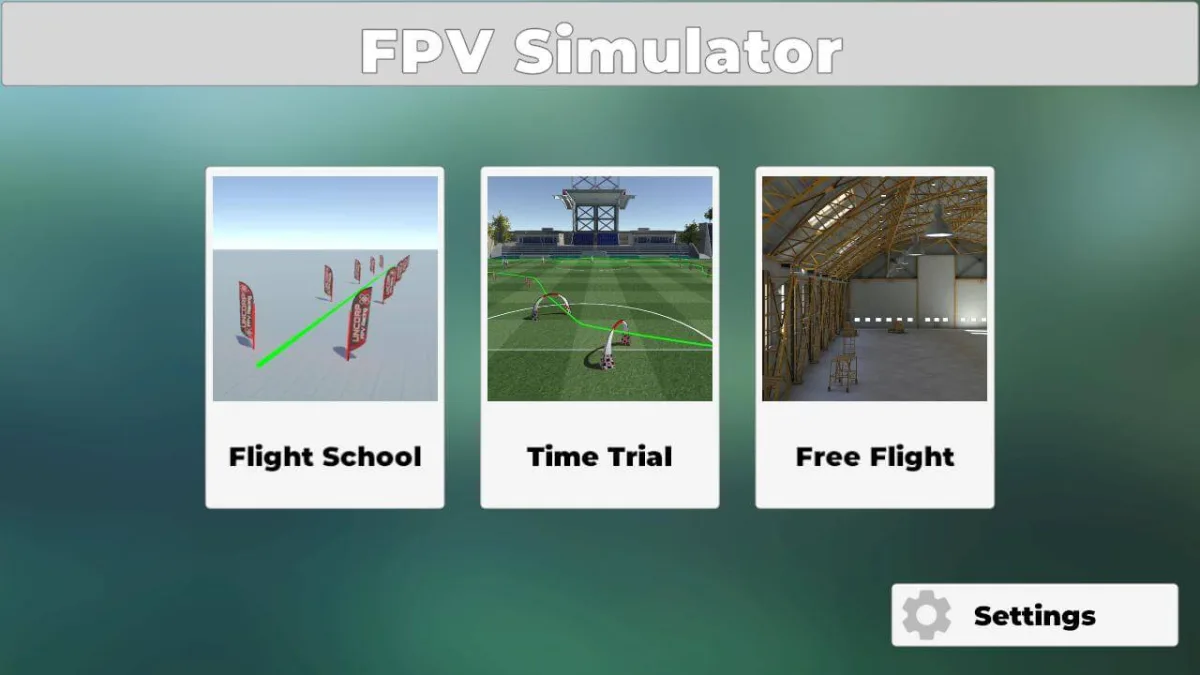
The ability to customize one’s virtual drone—from the color of the frame to the tune of the PID controller—adds a layer of personal investment and experimentation. Liftoff’s extensive workshop support on platforms like Steam is a standout feature, allowing the community to create and share an endless stream of new maps, drones, and liveries, effectively making the content limitless. The user experience begins long before the first virtual takeoff. It starts with installation, controller setup, and configuration. A simulator must offer broad compatibility with the wide ecosystem of RC radio controllers, requiring robust and intuitive calibration tools.
FPV Simulator Switch NSP Free Download Romslab
The process should be straightforward, guiding the user to map channels correctly and ensure the radio’s input is recognized accurately. A poor setup process can frustrate newcomers and obscure the quality of the simulation beneath technical hurdles. The in-game user interface must be clean and informative without being intrusive. Crucial data like battery voltage, signal strength, and a flight timer should be accessible. Menu systems for selecting drones, maps, and settings should be logical. Performance optimization is another critical aspect; the simulator must run smoothly on a range of hardware configurations. A stuttering frame rate or persistent graphical glitches can ruin immersion and hinder learning. Commandos 2 – HD Remaster Switch NSP
Add-ons (DLC): FPV Simulator Switch NSP
| – | NSP Format | – | – | – | – |
| – | – | – | – | – | – |
-
- First you will need YUZU Emulator. Download it. Open it in WinRar, 7ZIP idk and then move the contents in a folder and open the yuzu.exe.
- There click Emulation -> Configure -> System -> Profile Then press on Add and make a new profile, then close yuzu
- Inside of yuzu click File -> Open yuzu folder. This will open the yuzu configuration folder inside of explorer.
- Create a folder called "keys" and copy the key you got from here and paste it in the folder.
- For settings open yuzu up Emulation -> Configure -> Graphics, Select OpenGL and set it to Vulkan or OpenGL. (Vulkan seems to be a bit bad atm) Then go to Controls and press Single Player and set it to custom
- Then Press Configure and set Player 1 to Pro Controller if you have a controller/keyboard and to Joycons if Joycons. Press Configure and press the exact buttons on your controller After you're done press Okay and continue to the next step.
- Download any ROM you want from Romslab. After you got your File (can be .xci or .nsp) create a folder somewhere on your PC and in that folder create another folder for your game.
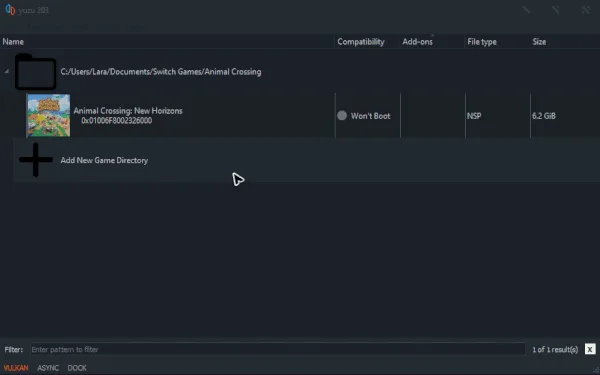
- After that double-click into yuzu and select the folder you put your game folder in.
- Lastly double click on the game and enjoy it.
NOTE: Some games may not run in Yuzu emulator, therefore you may use Ryujinx.
How to add DLC or Updates
Download the update of your game or DLCs, usually as a .nsp. Put it in your folder of the game, then open yuzu. Do exactly as in there as show in the gif
OS: 64-bit Windows 10 or MacOS 10.15: Catalina (Jazz)
Processor: Intel Core i7-4790 or AMD Ryzen 3 3600
Memory: 12 GB
Graphics Card: RTX 2080S/RTX 3070 or AMD Radeon RX 6800 XT
VRAM: 8 GB
Storage: SDD (798.1 MB )
INPUT: Nintendo Switch Joy con, Keyboard and Mouse, Xbox or PlayStation controllers
ONLINE REQUIREMENTS: Internet connection required for updates or multiplayer mode.
FPV Simulator – Technical Overview & Release Details
FPV Simulator (Latest Full Build) is available on Romslabs as a verified, complete release in the Nintendo Switch Games catalog. Every archive hosted in our repository is checked for file integrity so players can download, configure, and launch FPV Simulator without missing assets, corrupted packages, or unnecessary third-party launchers. Whether you are archiving a classic release or testing performance on modern hardware and handheld devices, the specifications and setup instructions below cover everything required for a smooth installation.
System Requirements & Compatibility Matrix
Before downloading FPV Simulator , review the hardware and platform compatibility table below to confirm your setup meets the recommended specifications:
| Specification | Minimum Setup (Handheld / 720p) | Recommended Setup (Docked / 1080p–4K Emulator) |
|---|---|---|
| Platform / Format | Nintendo Switch CFW / NSP | Switch OLED / Ryujinx / Sudachi (60 FPS) |
| Processor (Emulator) | Intel Core i5-8400 / Ryzen 5 2600 | Intel Core i5-12400F / Ryzen 5 5600X or higher |
| Memory (RAM) | 8 GB DDR4 | 16 GB DDR4 / DDR5 |
| Graphics (GPU) | NVIDIA GTX 1050 Ti / AMD RX 570 (Vulkan) | NVIDIA RTX 3060 / AMD RX 6600 XT |
| Build Version | Latest Full Build | Latest Full Build (Base + Update Ready) |
| Genre / Category | Nintendo Switch Games | Nintendo Switch Games |
How to Install & Configure FPV Simulator (Latest Full Build)
Follow this step-by-step checklist to install and verify FPV Simulator without common extraction or startup errors:
- Verify Download Integrity: Download the complete FPV Simulator archive from the verified mirrors below and extract using 7-Zip or WinRAR.
- Prepare Console or Emulator: Ensure your Nintendo Switch firmware or emulator (Ryujinx / Yuzu / Sudachi) has the latest prod.keys and firmware installed.
- Install Base Game & Update: Load the base NSP/XCI file first, then apply the Latest Full Build update and any included DLC packages through DBI, Tinfoil, Goldleaf, or your emulator's file installer.
- Configure Graphics & Controls: Launch FPV Simulator and verify Vulkan/OpenGL shader caching and Pro Controller or Joy-Con input mapping.
Troubleshooting & Optimization Tips
- Archive Extraction Errors: Always use the latest 64-bit build of 7-Zip or WinRAR and ensure your destination drive has at least 2x the archive size in free space during unpacking.
- Missing DLL or Black Screen on Launch: Install both
vc_redist.x64.exeandvc_redist.x86.exe, update your GPU drivers, and add the game folder to your Windows Defender exclusion list so real-time scanning does not quarantine game binaries. - Controller & Steam Deck Compatibility: FPV Simulator can be added as a Non-Steam Game using Proton GE on SteamOS/Linux, with Steam Input enabled for automatic gamepad mapping.
Key Features & Highlights
- Full Pre-Installed Release: Ready to play immediately upon extraction—no third-party setup or installer required.
- All Latest Updates & Patches: Fully updated to the latest build with performance optimizations, bug fixes, and bonus content.
- Dynamic Nintendo Switch Games Gameplay: Deep progression systems, responsive mechanics, and varied difficulty curves.
- High-Fidelity Audio & Visuals: Polished textures, smooth framerates, and rich sound design optimized for modern PC hardware.
- Verified Clean & Safe: 100% verified files free from bloatware, spyware, or intrusive background processes.
Frequently Asked Questions & Setup Guide
Q: What are the minimum system requirements for FPV Simulator ?
To run FPV Simulator (Latest v2026 Build) at 1080p 60 FPS, you need a 64-bit OS (Windows 10/11), a quad-core CPU (Intel Core i5 / Ryzen 5), 8 GB RAM minimum (16 GB recommended), and a Vulkan or DirectX 11/12 GPU with at least 4 GB VRAM.
Q: Can FPV Simulator run on Steam Deck or handheld PCs?
Yes, FPV Simulator runs smoothly on Steam Deck OLED/LCD, ROG Ally, and Legion Go at 720p/800p medium-to-high settings using Proton GE or native Vulkan rendering.
Q: How much disk space does FPV Simulator (Latest v2026 Build) require?
You should reserve at least 2x the compressed download size during extraction so temporary installer files unpack without disk errors.